
When I first checked my car battery, I was confused about voltage. After facing starting problems, I learned that voltage shows battery health and helps avoid sudden car troubles.
How Many Volts Is A Car Battery? (Short Answer)
A standard car battery is 12 volts, but when it is fully charged, the voltage usually rises to 12.6 to 12.8 volts. When the engine is running, the alternator increases the voltage to around 13.7–14.7 volts to recharge the battery and power the car’s electrical systems.
In this article, we will discuss how many volts Is A Car Battery.
Introduction
If you’ve ever popped your car’s hood and stared at the battery like it’s a mysterious black box, you’re not alone. One of the most common questions car owners ask is simple but important:
How many volts is a car battery? The short answer is 12 volts, but honestly, that’s just the tip of the iceberg. Let’s break it all down in a way that actually makes sense, without sounding like a boring textbook.
Understanding Car Battery Voltage Basics

What Is Voltage?
Voltage is the amount of electrical “force” that drives the flow of electricity through a circuit. In simple terms, it’s what makes electricity flow from your car battery to start the engine and power your car’s electronics.
What Does Voltage Mean in a Car Battery?
Think of voltage as electrical pressure. Just like water pressure pushes water through pipes, voltage pushes electricity through your car’s electrical system.
Your battery stores energy and releases it as voltage to start the engine, power lights, run electronics, and keep everything alive when the engine isn’t running.
Why Voltage Matters for Your Vehicle?
Voltage isn’t just a number; it’s a health indicator. Too low? Your car struggles to start.
Too high? You risk frying electronics. In short, correct voltage keeps your car happy and drama-free.
Standard Voltage of a Car Battery
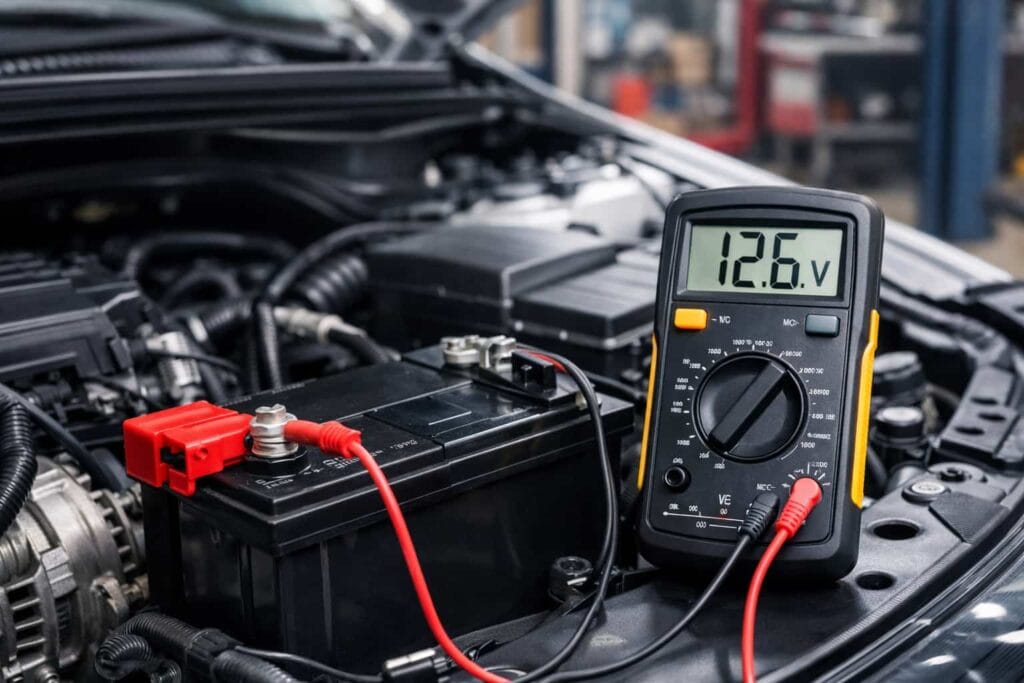
How Many Volts Is a Typical Car Battery?
A standard car battery is 12 volts. More accurately, it’s made up of six cells, each producing about 2.1 volts, adding up to 12.6 volts when fully charged. So when people say “12-volt battery,” that’s just rounding things off.
Why Did 12 Volts Become the Standard?
Back in the day, cars used 6-volt batteries. But as vehicles became more advanced with radios, heaters, and electronics, 12 volts provided better performance, faster starts, and improved reliability.
Car Battery Voltage When Fully Charged
Ideal Voltage Range for a Healthy Battery
A fully charged car battery should read between
- 12.6 to 12.8 volts (engine off)
This is the sweet spot. Anything below that means your battery is losing strength.
Resting Voltage vs. Running Voltage
- Resting voltage: Battery at rest, engine off
- Running voltage: Engine on, alternator charging
Both numbers matter, and they tell different stories about your car’s health.
Car Battery Voltage While the Engine Is Running
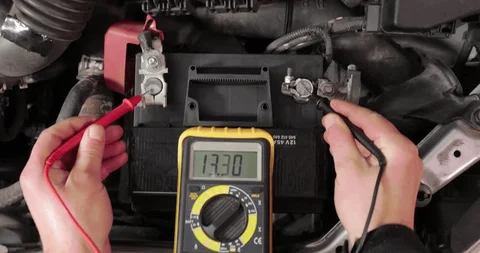
Role of the Alternator
Once the engine starts, the alternator takes over. It not only supplies power to the car but also charges the battery at the same time.
Normal Voltage While Driving
With the engine running, the voltage should read:
- 13.7 to 14.7 volts
If it’s lower, your alternator may be failing. If it’s higher, you might be overcharging.
Low Voltage Car Battery Explained
Signs of a Low Voltage Battery
Low voltage is like your battery whispering, “Help me.” Watch for:
- Slow engine crank
- Dim headlights
- Clicking sound when starting
- Dashboard warning lights
What Voltage Is Too Low to Start a Car?
- 12.4 volts: Weak
- 12.2 volts: Struggling
- Below 12.0 volts: Likely won’t start
At this point, a jump-start or replacement is usually needed.
High Voltage in a Car Battery
Is High Voltage Dangerous?
Yes, too much voltage can damage sensors, ECUs, and infotainment systems. Modern cars are as sensitive as smartphones on wheels.
Causes of Overcharging
- Faulty alternator
- Bad voltage regulator
- Incorrect charger
High voltage isn’t common, but when it happens, it’s expensive.
How to Check Car Battery Voltage?
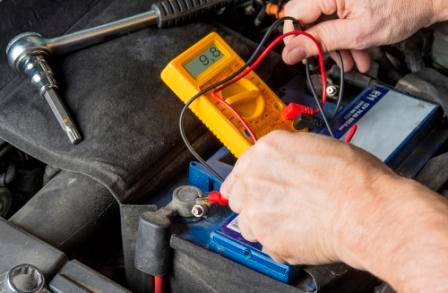
Using a Multimeter

This is the most accurate method:
- Set the multimeter to DC volts
- Connect red to positive, black to negative
- Read the voltage
Simple, fast, reliable.
Checking Voltage Without Tools
No tools? No problem, sort of.
- Dim lights
- Slow start
- Electronics acting weird
Not precise, but helpful in a pinch.
Car Battery Voltage by Battery Type
Lead-Acid Batteries
- Standard voltage: 12.6V
- Most common
- Affordable but needs maintenance
AGM Batteries
- Voltage: 12.8V
- Better performance
- Longer lifespan
Lithium Car Batteries
- Voltage varies (12.8–13.2V)
- Lightweight
- Mostly used in performance or EV systems
6-Volt vs 12-Volt Car Batteries
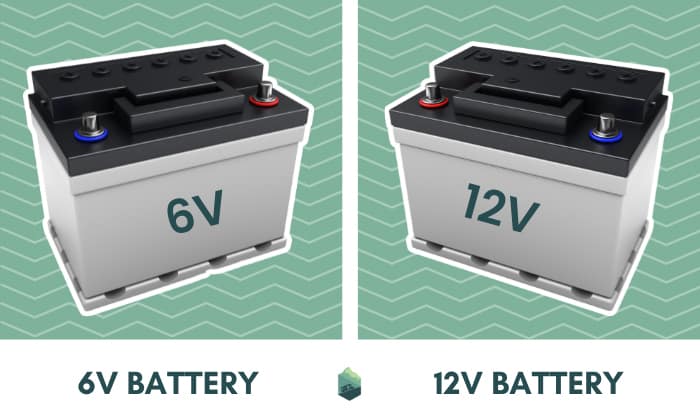
Older Cars and Classic Vehicles
Classic cars often use 6-volt batteries, which are fine for simple systems but weak by today’s standards.
Why Modern Cars Use 12 Volts?
Modern cars need more power for:
- Computers
- Sensors
- Safety systems
Twelve volts hits the perfect balance.
How Does Temperature Affect Car Battery Voltage?
Cold Weather Impact
Cold slows chemical reactions, lowering voltage. That’s why winter kills batteries.
Hot Weather Impact?
Heat accelerates wear and evaporates battery fluids, reducing lifespan even if voltage looks fine.
Can a Car Battery Lose Voltage Overnight?
Parasitic Drain Explained
Some systems stay active even when the car is off, like clocks and alarms.
Common Causes of Overnight Drainage
- Faulty wiring
- Aftermarket accessories
- Interior lights left on
If voltage drops overnight, something’s stealing power.
How Long Can a Car Battery Hold Its Voltage?
Battery Age and Voltage Stability
Most batteries last 3–5 years. After that, the voltage drops faster than your phone at 1%.
Maintenance Tips
- Keep terminals clean
- Drive regularly
- Avoid deep discharges
Small habits = longer battery life.
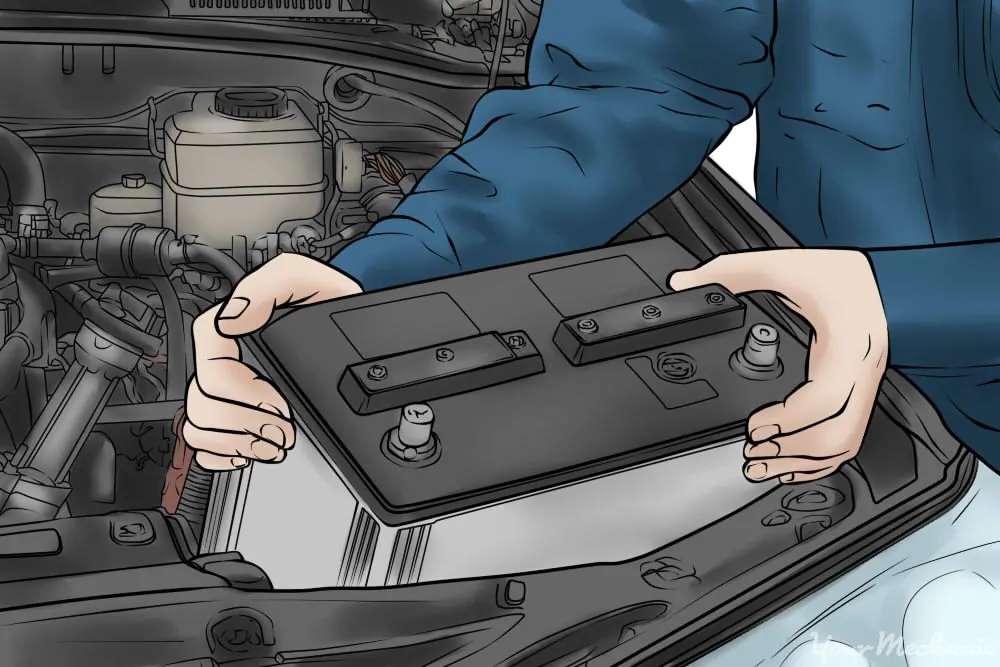
When to Replace a Car Battery Based on Voltage?
Voltage Warning Signs
If your battery can’t hold 12.4 volts or more, replacement is near.
Repair vs. Replacement
Charging helps temporarily. Replacement fixes the problem permanently.
Common Myths About Car Battery Voltage
More Volts Means More Power?
Nope. Power depends on voltage and current. More volts alone won’t make your car faster.
Jump-Starting Myths
Jump-starting doesn’t fix a bad battery; it just buys you time.
Car Battery Charger
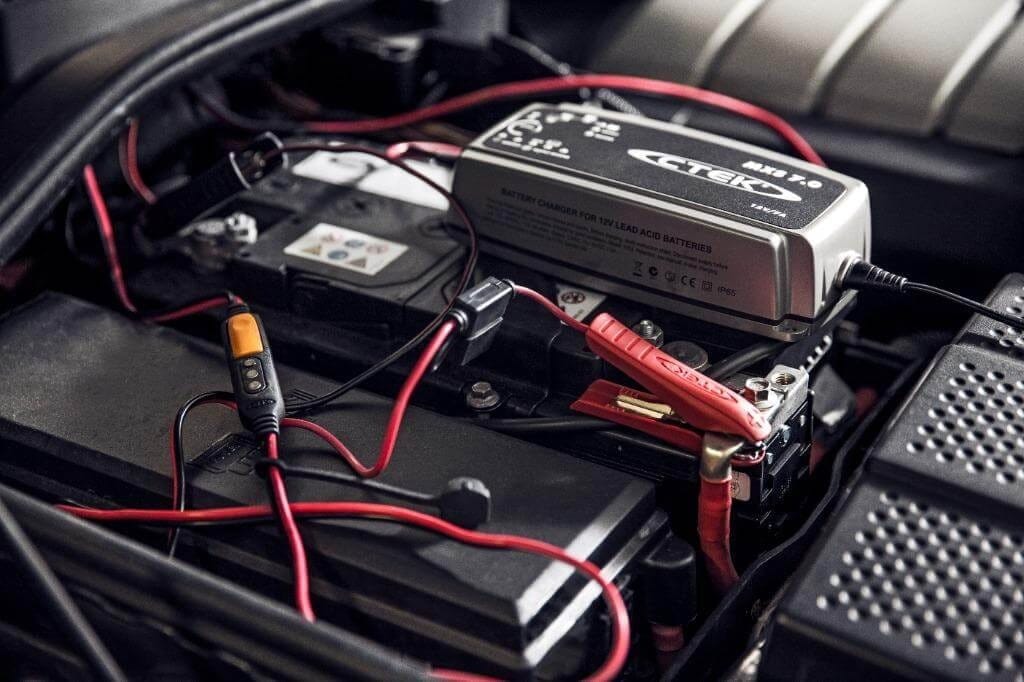
A car battery charger is a device that restores the charge in a car battery. It supplies electricity to the battery so it can regain full power after running low. Using a charger regularly can help extend the life of your battery and prevent unexpected breakdowns.
Most chargers have different modes for slow or fast charging. Some modern chargers also include safety features to prevent overcharging or damage to the battery. They are easy to use and essential for anyone who wants to maintain a healthy car battery.
Car Battery Voltage Below 12V
If your car battery voltage drops below 12 volts, it indicates the battery is weak or partially discharged. At around 11.7 volts, the battery may not have enough power to start the car reliably, and frequent jump-starts may be needed.
Low voltage can be caused by leaving lights on, electrical drain, or an old battery. It’s important to recharge the battery quickly and monitor it, as consistently low voltage can shorten the battery’s lifespan and leave you stranded.
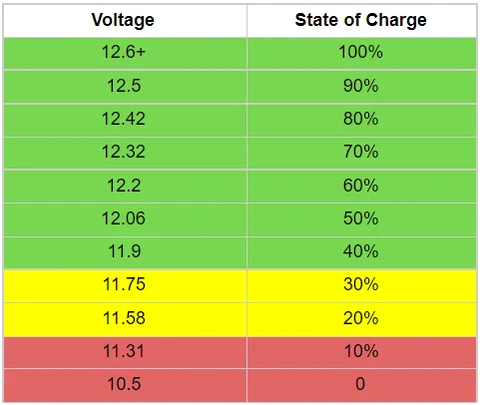
Car Battery Voltage Chart
A car battery voltage chart makes it easier to check the condition and performance of your battery. For example, 12.6–12.8 volts means fully charged, 12.4 volts is moderately charged, and below 12.0 volts indicates a dead battery.
By checking your battery against this chart, you can quickly see if it needs charging or replacement. It’s a handy guide for both new and experienced car owners to prevent battery problems before they happen.
Normal Battery Voltage When Car Is Off
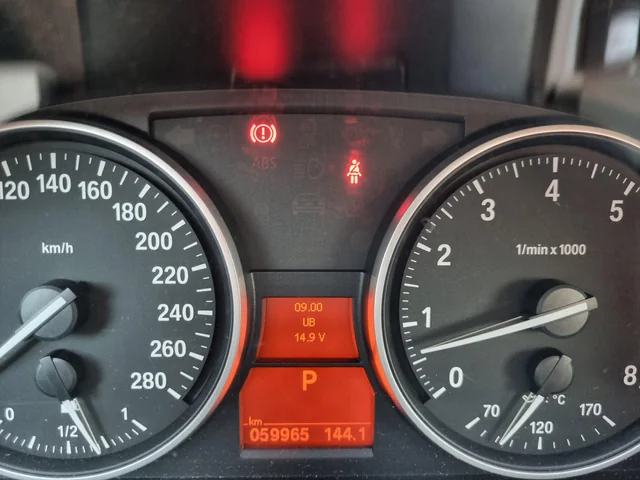
When the car is off, a healthy battery should read 12.6 to 12.8 volts. This is called the resting voltage, and it shows the battery is fully charged and in good condition.
If the voltage is below 12.4 volts when the car is off, it means the battery is partially discharged or weakening. Regularly checking your battery voltage while the car is off helps you catch potential issues early and avoid starting problems.
FAQs
1. What Is Voltage?
Voltage is the electrical pressure that pushes power from the battery to start the car and run electrical systems.
2. Is 11.7 Volts a Dead Battery?
Yes, 11.7 volts means the battery is very weak and may not start the car without a jump.
3. Is A Car Battery 12 Or 24 Volts?
Most cars use a 12-volt battery. 24-volt systems are usually found in trucks or heavy equipment.
4. How Much Voltage Does Your Car Battery Have?
A healthy car battery has 12.6–12.8 volts when fully charged and the engine is off.
5. How Much Voltage Does a Car Battery Need?
A car battery needs at least 12.2 volts to start the engine properly.
6. How to Test Your Car’s Voltage?
You can test battery voltage using a multimeter by connecting it to the battery terminals.
7. What Causes a Battery to Lose Voltage?
Common causes include battery age, cold weather, leaving lights on, and electrical drain.
8. What Are The Signs Of A Weak Battery?
Slow engine start, dim headlights, clicking sounds, and warning lights are common signs.
9. How many volt is a car battery?
A standard car battery is 12 volts, rising to 13.7–14.7 volts when the engine is running.
10. How Many Amps Is a Car Battery?
A car battery usually provides 400 to 800 cold cranking amps (CCA), depending on the vehicle.
11. When to Replace Car Battery Voltage?
You should replace the battery if voltage stays below 12.2 volts even after charging.
12. How Many Volts Is a Car Battery to Start?
A car battery needs at least 12.2–12.4 volts to start the engine reliably.
13. How Many Amps Is A 12 Volt Car Battery?
A 12-volt car battery typically delivers 500–700 amps for engine starting.
14. What Is The Voltage Of A New Car Battery?
A new car battery usually measures 12.6 to 12.8 volts when fully charged.
15. What Voltage Should a 12V Car Battery Be?
A healthy 12V car battery should read 12.6–12.8 volts with the engine off.
16. How Many Volts Is a Fully Charged Car Battery?
A fully charged car battery is about 12.6 to 12.8 volts.
17. How Many Volts Is Considered a Dead Car Battery?
A battery below 12.0 volts is considered dead or near failure.
18. How Many Volts Is a Car Battery When Fully Charged?
When fully charged, a car battery should show 12.6–12.8 volts.
Conclusion
Understanding car battery voltage is essential for keeping your vehicle reliable. A standard battery is 12 volts, fully charged at 12.6–12.8 volts, and rises to 13.7–14.7 volts while running. Regular checks and proper maintenance help prevent starting issues and extend battery life, keeping your car safe and hassle-free.