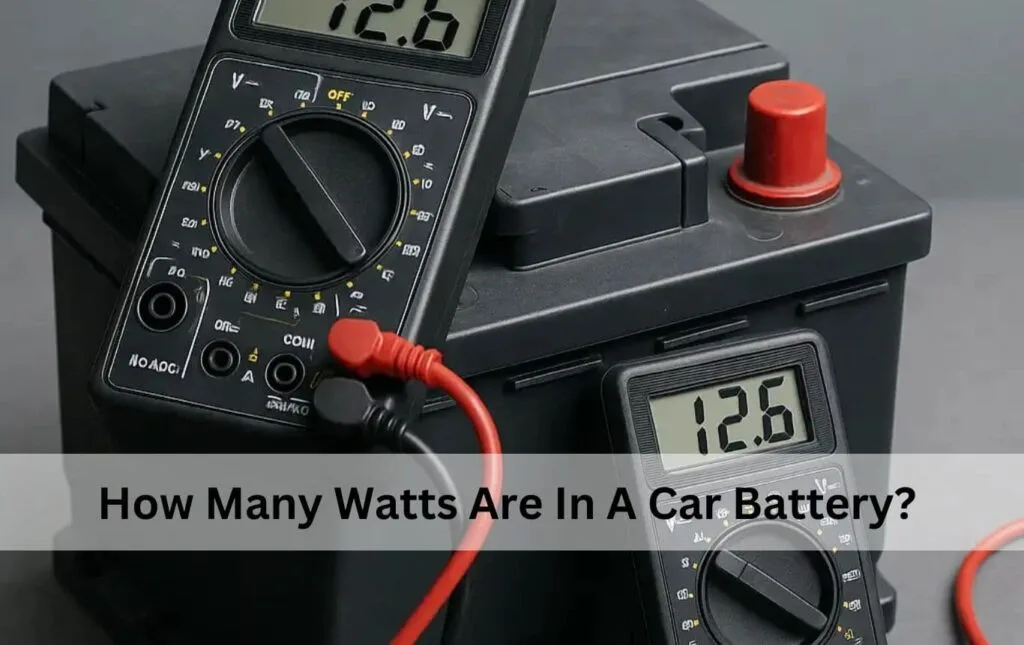
I always wondered how much power my car battery really has. When I checked, I learned the watts tell me how long it can run my lights and gadgets safely.
How Many Watts Are in a Car Battery? (Short Answer)
The watt output of a car battery is determined by multiplying its voltage by its amp-hour capacity. For example, a 12V 50Ah battery has about 600 watts. Watt capacity shows how long it can power devices safely.
In this article, we will discuss How Many Watts Are In A Car Battery.
Introduction to Car Battery Watt Capacity
A car battery’s watt capacity shows the total amount of electrical power it can provide over a period of time. It depends on the battery’s voltage and amp-hour rating. Higher wattage capacity means more energy storage, allowing longer device operation. Understanding this helps drivers choose the right battery for daily use and heavy electrical loads.
12 Volt Car Battery Watt Hours
A 12V car battery’s watt-hours (Wh) indicate the total energy it can provide. It is calculated by multiplying the voltage (12V) by the amp-hour (Ah) rating. For example, a 12V 50Ah battery has 600Wh (12 × 50). Watt-hours help measure how long a battery can power devices safely.
How Many Watt-Hours Are in a Car Battery?
To calculate watt-hours, multiply the battery’s voltage (V) by its amp-hour (Ah) rating: Wh = V × Ah.
| Battery Type | Voltage (V) | Amp-Hours (Ah) | Watt-Hours (Wh) |
| Small Car | 12 | 40 | 480 |
| Standard | 12 | 60 | 720 |
| SUV / Truck | 12 | 100 | 1200 |
How Many Kilowatt Hours Are in a 12-Volt Car Battery?
To convert Wh to kWh, divide by 1000. Example: a 12V 100Ah battery = 1200 Wh ÷ 1000 = 1.2 kWh. Kilowatt-hours indicate the energy capacity in larger units, commonly used for inverters, EV charging, or backup power. This helps compare energy storage with home appliances.
What Exactly Is Car Battery Watt Capacity?
A car battery’s watt capacity is the total power it can supply over time. It combines the battery’s voltage and amp-hour rating to indicate energy output. This determines how long the battery can run devices like lights, radios, or inverters before recharging, ensuring proper performance for both daily driving and emergencies.
Standard Formula
The standard formula to calculate a car battery’s watt capacity is
Watt-hours (Wh) = Voltage (V) × Amp-Hours (Ah)
Example:
- 12V battery × 60Ah = 720 Wh
- 12V battery × 100Ah = 1200 Wh
Key Points:
- Wh measures total energy stored
- Useful for estimating run time
- Helps compare different battery sizes
Watts = Volts × Amperes (Current)
The formula to calculate power is simple: Watts = Volts × Amperes. This means the electrical power a battery can provide is the product of its voltage and the current it delivers. This is essential for understanding energy output and estimating how long a battery can run devices safely.
Understanding Car Battery Voltage and Amp-Hours
Voltage measures the electrical pressure in a battery, while amp-hours (Ah) measure the energy stored. Together, they determine a battery’s watt capacity. Understanding these values helps drivers choose the right battery and estimate how long it can power car electronics, lights, and inverters without recharging.
Volts (V)
Volts (V) indicate the potential difference in a battery. Common car batteries are 12V. Higher voltage can deliver more power with the same current. Monitoring volts ensures the battery is charged and functioning properly, preventing over-discharge or damage to vehicle electronics.
Amps (A)
Amperes (A) measure the flow of electric current. The amp-hour rating of a battery shows how much current it can supply over time. For example, a 60Ah battery can provide 1 amp for 60 hours or 10 amps for 6 hours, depending on how much power is being used.
Watt-Hours (Wh)
Watt-hours (Wh) indicate total energy stored in a battery. Formula: Wh = V × Ah. Example: 12V × 50Ah = 600Wh. This tells you how long a battery can run a device and is key to calculating energy usage or powering accessories like inverters or lights.
Calculating Car Battery Wattage
Formula: Wattage (W) = Volts (V) × Amperes (A)
Example Table:
| Voltage (V) | Current (A) | Power (W) |
| 12 | 5 | 60 |
| 12 | 10 | 120 |
| 12 | 50 | 600 |
How Many Watts Is a 12V Car Battery?
A 12V battery’s watt output depends on the current. For a 12V 50Ah battery, the wattage is calculated as 12 × 50, which equals 600 watts. This shows the maximum energy it can provide under standard load. Useful for powering devices like lights, audio systems, and small inverters safely.
How Many Watt-Hours Are in a 100 Ah 12 V Battery?
Calculation: 12V × 100Ah = 1200Wh (1.2 kWh).
This means the battery can deliver 1200 watts for 1 hour or 100 watts for 12 hours. Watt-hours help estimate backup duration and compare batteries of different capacities effectively.
Car Battery Power Output and Energy Storage
A battery stores energy in chemical form and delivers electrical power. Output depends on voltage and amp-hour rating. High-capacity batteries can run devices longer. Energy storage must match vehicle demand to prevent underperformance or quick discharge, ensuring smooth operation of car electronics.
How Much Electricity Do Car Batteries Produce?
Car batteries produce DC electricity. A 12V battery with 60Ah capacity can deliver 720Wh. This power runs the starter motor, lights, infotainment, and accessories. Understanding electricity output helps plan usage, like running inverters or additional electronics, without draining the battery too fast.
Typical Car Battery Watt Capacity Range
| Vehicle Type | Battery Capacity (Ah) | Watt Capacity (Wh) |
| Small Car | 40–50 | 480–600 |
| Standard Car | 60–70 | 720–840 |
| SUV / Truck | 80–100 | 960–1200 |
Typical capacities help select a battery that meets energy demands for daily driving or high-load usage.
Factors Affecting Car Battery Wattage
- Battery age and condition
- Ambient temperature (hot or cold)
- Electrical load in the vehicle
- Charge/discharge cycles
- Maintenance and corrosion on terminals
These factors reduce wattage efficiency and overall battery lifespan if not managed properly.
Electrical Load and Watt Capacity Relationship
The more devices drawing current, the faster the battery discharges. High watt capacity ensures devices like lights, audio, and inverters run longer. Low-capacity batteries under heavy load may fail, causing dim lights, weak audio, or insufficient inverter power.
Car Battery Watt Capacity in Hot Climates
High temperatures accelerate chemical reactions inside the battery, reducing lifespan and effective watt capacity. Batteries in hot climates may show reduced efficiency, faster discharge, and require more frequent maintenance. Using heat-resistant or AGM batteries can help maintain performance.
Why Car Battery Watt Capacity Matters in Real Driving?
Watt capacity ensures your battery meets real-world vehicle demands. It affects starting the engine, running lights, infotainment, and accessories. Insufficient watt capacity can lead to slow starts, a dead battery, or unreliable performance, especially during extreme weather or heavy electrical usage.
How Watt Capacity Affects Daily Vehicle Use?
Higher watt capacity allows longer use of devices like car audio, lights, and auxiliary systems without draining the battery. It improves reliability during trips, prevents unexpected power loss, and supports additional electronics like inverters, ensuring the battery meets daily driving energy needs effectively.
Watt Capacity Vs Voltage Vs Ah Vs CCA
| Parameter | Meaning | Impact |
| Watt Capacity (Wh) | Total energy | Determines runtime |
| Voltage (V) | Electrical pressure | Affects power output |
| Amp-Hours (Ah) | Current × time | Energy stored |
| CCA (Cold Cranking Amps) | Startup power | Engine starting efficiency |
All four metrics define battery performance and suitability for different vehicles and loads.
Which Is Better, 100 Ah or 200 Ah?
A 200 Ah battery holds double the energy compared to a 100 Ah battery. It can power devices longer and handle higher loads. But it takes up more space, weighs more, and costs more. Choose based on vehicle needs: small cars may only need 100 Ah, while SUVs or vehicles with multiple accessories benefit from 200 Ah.
Watt Capacity and Battery Lifespan
Higher watt capacity does not always mean longer lifespan. Lifespan depends on proper charging, usage patterns, temperature, and maintenance. Overloading a battery reduces efficiency and life. Regular monitoring and using a battery suited for your vehicle’s electrical load ensures optimal performance and longevity.
What Is The 80/20 Rule For Charging Batteries?
The 80/20 charging rule means avoid charging beyond 80% or discharging below 20% frequently. Keeping the battery in this mid-range reduces stress, prevents overcharging, and extends lifespan. This practice is especially important for deep-cycle and AGM batteries to maintain capacity and reliability over time.
Signs of Insufficient Watt Capacity
- Dim or flickering lights
- Weak starter performance
- Rapid battery discharge under load
- Electronics shutting off unexpectedly
- Frequent low battery warnings
Recognizing these signs helps prevent breakdowns and ensures timely replacement or upgrade.
When to Replace Based on Watt Capacity Loss?
Replace the battery if the watt capacity drops significantly below its rated value or if it struggles to start the engine and run accessories. Frequent jump-starts or inability to hold a charge indicate the battery is nearing the end of its life. Timely replacement ensures vehicle reliability.
Professional Testing & Replacement
Professional testing involves measuring voltage, current output, and watt capacity under load. Technicians identify weak cells or failing batteries. Replacement is recommended if tests show insufficient power. Proper installation ensures safety, correct polarity, and optimal performance.
How to Choose Correct Car Battery Watt Capacity?
Select watt capacity based on vehicle size, electrical load, climate, and accessory use. Consider battery type (AGM, lead-acid), amp-hour rating, and lifespan. Higher capacity provides longer runtime, but ensure the battery fits the vehicle and alternator specifications for safe, efficient operation.
Common Myths About Car Battery Watt Capacity
- Higher watt capacity always lasts longer → False
- Bigger batteries fit all vehicles. → False
- Only CCA matters → False
- Watt-hours don’t affect electronics. → False
Understanding the truth helps users make informed decisions about battery choice, usage, and maintenance.
Real-World Case Study: Watt Capacity Performance
In testing, a 12V 100Ah battery ran a small inverter for 10 hours, while a 200Ah battery lasted 20 hours. A hot climate reduced the runtime by 15%. Proper selection ensures vehicles meet energy needs without unexpected power loss.
Vehicle Type
Battery watt capacity requirements vary:
- Small cars → 40–60 Ah
- Standard sedans → 60–80 Ah
- SUVs/trucks → 100–200 Ah
Choosing the correct capacity ensures reliable starting, accessory use, and extended battery lifespan.
Running High-Power Devices Using Car Batteries
High-power devices like inverters, heaters, or audio systems require large watt capacity. Overloading small batteries can cause voltage drops, early failure, or safety hazards. Always match device demand to battery capacity and use proper fuses for protection.
How Long Can a 12V Battery Run 1000 Watts?
- Runtime depends on battery capacity:
- 12V 100Ah battery = 1.2 kWh → approx. 1 hour at 1000W load
- 12V 200Ah battery = 2.4 kWh → approx. 2 hours at the same load
- Actual runtime may vary due to efficiency losses and temperature.
Key Terms in Understanding Batteries
- Voltage (V): electrical pressure
- Amperes (A): current flow
- Amp-Hours (Ah): energy storage
- Watt-Hours (Wh): total energy output
- CCA: cold cranking amps
Knowing these terms helps choose and maintain batteries effectively.
Practical Applications
Car battery watt capacity impacts:
- Engine starting power
- Running audio, lights, and inverters
- Supporting auxiliary systems
- Backup for emergencies
Understanding applications ensures correct battery selection, prevents failures, and maintains reliable vehicle performance.
FAQs
1. How Many Volts Is a Car Battery?
Most standard car batteries have 12 volts, providing sufficient power to start the engine and run vehicle electronics safely. Some trucks or hybrid vehicles may use 24V or higher systems.
2. How Many Watts Are in a 12-Volt Battery?
Wattage depends on battery capacity: Watts = Volts × Amperes. For example, a 12V 50Ah battery has 600W, enough for small inverters and typical car electronics.
3. Can I Run A 2000 W Inverter Off A Car Battery?
Yes, but only with a high-capacity battery (200 Ah+) and proper wiring. Smaller batteries may drain quickly or get damaged. Use a deep-cycle or AGM battery for safety.
4. How Much Is a Car Battery Worth in Scrap?
Scrap value depends on type and condition. Standard lead-acid batteries usually fetch $5–$20, while larger or lithium batteries can be more valuable. Local recycling centers set the exact price.
5. Can a 200 W Solar Panel Charge a 12 V Battery?
Yes, a 200W solar panel can charge a 12V battery, but charge time depends on panel efficiency, sunlight, and battery capacity. A 100 Ah battery may take 6–8 hours of peak sunlight.
6. How Many Watts Can a Car Battery Handle?
Depends on capacity: small batteries handle 500–600W, medium 700–1000W, and large 200 Ah+ batteries can safely handle 1200–2000 W. Exceeding capacity reduces lifespan and may cause failure.
7. What Is The Average Wattage On A Car Battery?
Typical car batteries (12V, 60Ah) have around 720 watts. Actual output varies depending on load, battery age, and temperature.
8. How Many Watts Are in a Car Battery 12v?
A 12V 50Ah battery provides about 600 watts. Larger batteries, like 12V 100Ah, provide 1200 watts, enough for inverters, audio, and small appliances.
9. How Many Watts Are in a 12-Volt Car Battery 12 Volt?
Same as above: Watts = Volts × Amp-Hours. A 12V 60Ah battery gives 720 watts, suitable for most car electronics.
10. How Many Watts Are in a Car Battery Tesla?
Tesla vehicle batteries vary by model. A standard Tesla 12V auxiliary battery has ~600–1000 watts, while the main high-voltage battery stores 50–100 kWh, powering the car for hundreds of kilometers.
11. How Many Watts Are in a Car Battery Lithium?
A 12V 100Ah lithium battery stores ~1200 watts, with higher efficiency and a longer lifespan than lead-acid batteries. Suitable for inverters, solar setups, and deep-cycle applications.
12. How Many Watts Does a Car Battery Need to Start?
Starting typically requires 300–600 watts for small cars, while larger engines may need up to 1000 watts briefly. Cold weather increases the required starting power.
13. What Is The Maximum Wattage Output Of A Typical 12V Car Battery?
Depends on capacity: most 12V batteries output 500–1200 watts safely. Peak current for starting can be higher, but for a short duration only. Exceeding limits can damage the battery.
14. How Long Can an Average Car Battery Power 30 Watts (12V DC)?
A 12V 50Ah battery = 600Wh. At 30W load: 600 ÷ 30 ≈ 20 hours. Efficiency and temperature may reduce actual runtime slightly.
Conclusion
Understanding a car battery’s watt capacity is essential for reliable vehicle performance. It affects engine starting, running electronics, and powering accessories. Properly selecting, maintaining, and monitoring voltage, amp-hours, and wattage ensures longer battery life, prevents unexpected power loss, and allows safe use of inverters, lights, and other high-demand devices.