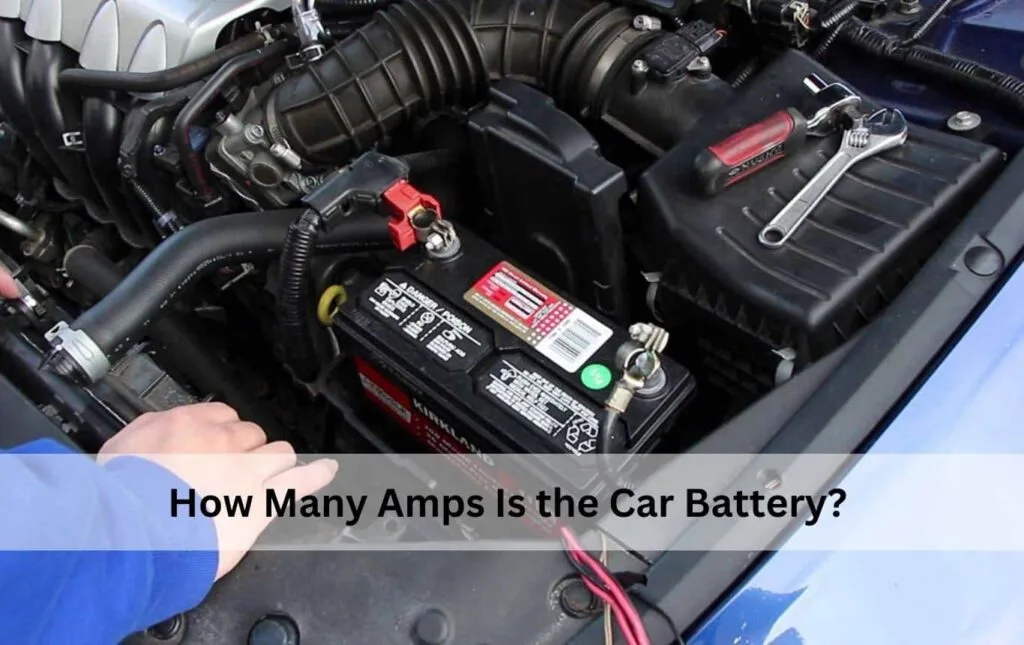
When my car wouldn’t start one cold morning, I realized volts aren’t enough. Amps are what actually start the engine. Learning this helped me understand battery power better.
How many amps is the car battery? (Short Answer)
A standard car battery delivers 400–600 amps for small cars and 700–1,000+ amps for larger vehicles or trucks. These amps provide the power needed to start the engine quickly. Cold weather may require higher cranking amps.
In this article, we will discuss how many amps is the car battery.
Understanding the Basics of Car Batteries
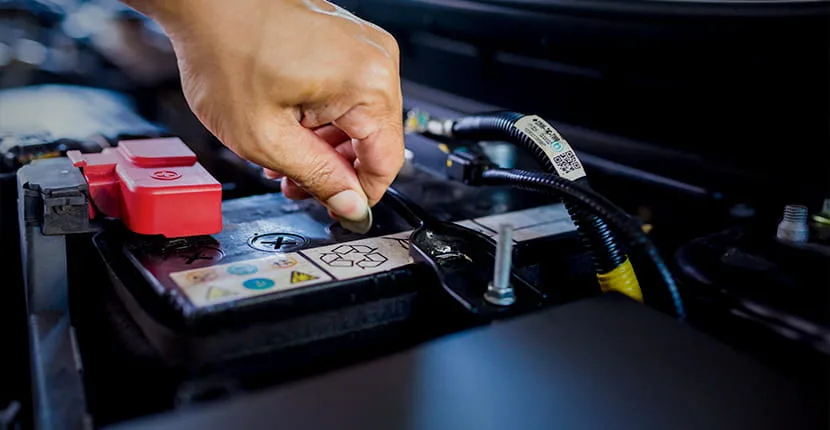
What Is A Car Battery, And What Does It Do?
A car battery is like your vehicle’s heartbeat. Without it, nothing wakes up. It powers the starter motor, fuels the ignition system, and keeps electronics alive when the engine is off. From headlights to infotainment systems, everything depends on this compact power box sitting under your hood.
But here’s the twist: most people obsess over volts and forget about amps. That’s like caring about water pressure but ignoring how much water actually flows through the pipe.
Why Amps Matter More Than You Think?
Amps determine how much electrical power your battery can deliver. High amps mean your battery can deliver strong bursts of energy when needed, especially during engine startup. Without enough amps, even a fully charged battery can fail you on a cold morning.
What Does “Amps” Mean In A Car Battery?
Difference Between Amps, Volts, and Watts
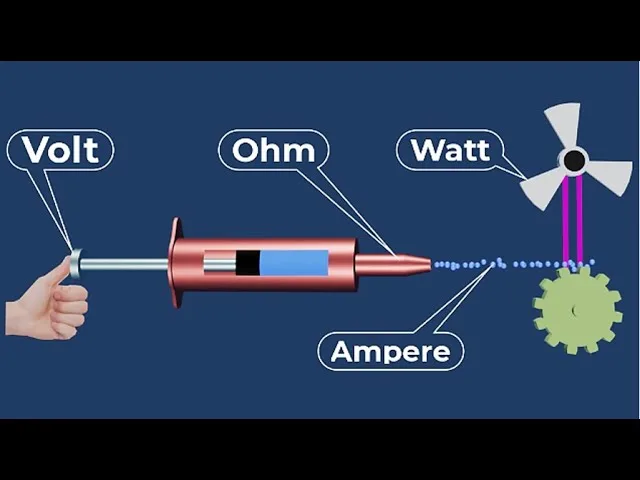
Let’s simplify this without turning it into a physics lecture:
- Volts = electrical pressure
- Amps = electrical flow
- Watts = total power (volts × amps)
Your car battery usually runs at 12 volts, but amps decide how powerful that 12V actually is.
Simple Real-Life Analogy to Understand Amps
Imagine electricity as water:
- Voltage is water pressure.
- Amps are how much water flows.
- Watts are how hard that water hits a turbine.
A trickle won’t spin the turbine, no matter how high the pressure is.
How Many Amps Do Different Types of Car Batteries Use?
Car batteries are rated by amps and amp-hours (Ah). Amps show the power a battery can deliver, while amp-hours indicate how long it can last. Small cars usually use 40Ah, large vehicles 50Ah, and oversized vehicles 75Ah. Most cars have 250–600 CCA, depending on engine size
Car Battery Size Comparison
| Vehicle Type | Wattage | Voltage | Amp-Hours |
| Small Car | 480W | 12V | 40Ah |
| Large Vehicle | 600W | 12V | 50Ah |
| Oversized Vehicle | 900W | 12V | 75Ah |
How Many Amps Is A Typical Car Battery?
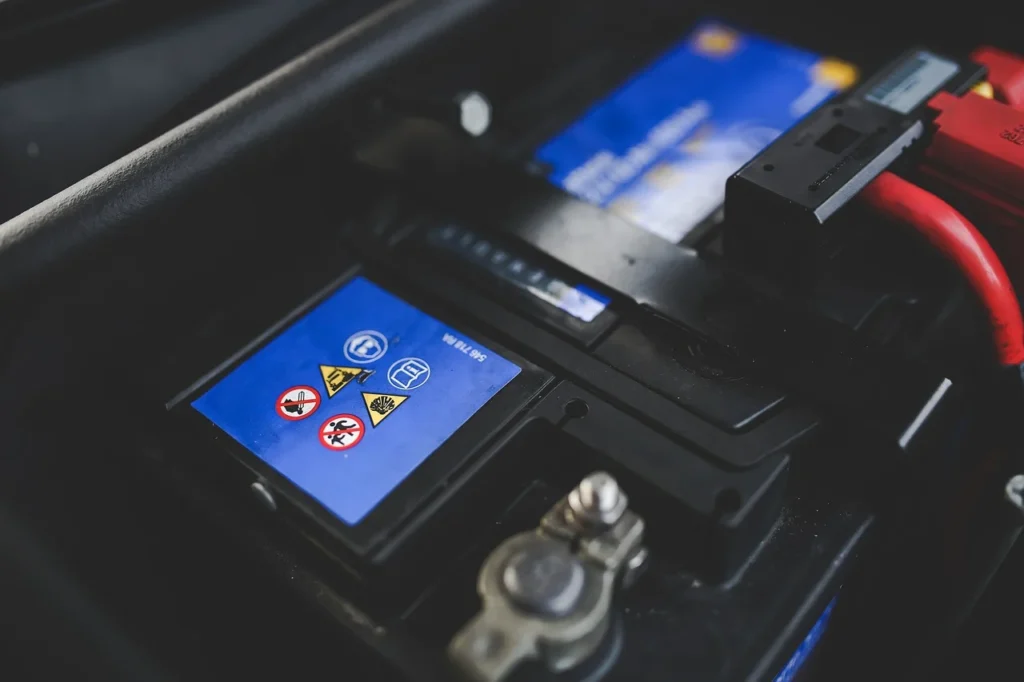
Average Amps Of Standard Car Batteries
A normal car battery can deliver:
- 400 to 600 amps for gasoline vehicles
- 700 to 1000 amps for trucks and diesel engines
These amps aren’t flowing constantly, they’re unleashed in short, powerful bursts.
Cold Cranking Amps (CCA) Explained
Cold Cranking Amps measure how many amps a battery can supply at 0°F (-18°C) for 30 seconds without dropping below safe voltage. It’s the gold standard for judging battery strength.
Cranking Amps Vs Cold Cranking Amps
| CA | CCA |
| Measured at 32°F (0°C) | Measured at 0°F (-18°C) |
| Works in normal weather | Designed for cold weather |
| WattsLess important overall | More important rating |
| Higher in warm climates | Critical for winter starts |
How to Calculate Your Car Battery Amps?
- Car battery amps change depending on usage.
- More systems (AC, lights, HVAC) = more amps used
- Cold Cranking Amps (CCA) show starting power.
- Most car batteries have 400–1000 CCA.
- CCA rating is printed on the battery label
Method 1: Manufacturer Details
- Check the battery label for amp rating.
- Look in the car owner’s manual
- Search your car model on the manufacturer’s website
- Ask a mechanic or an auto parts store
Method 2: Calculate Amps Using Ohms
- Useful when charging or testing a battery
- You must know voltage and resistance.
- Formula: Amps = Volts ÷ Ohms
- Example: 12V ÷ 4Ω = 3A
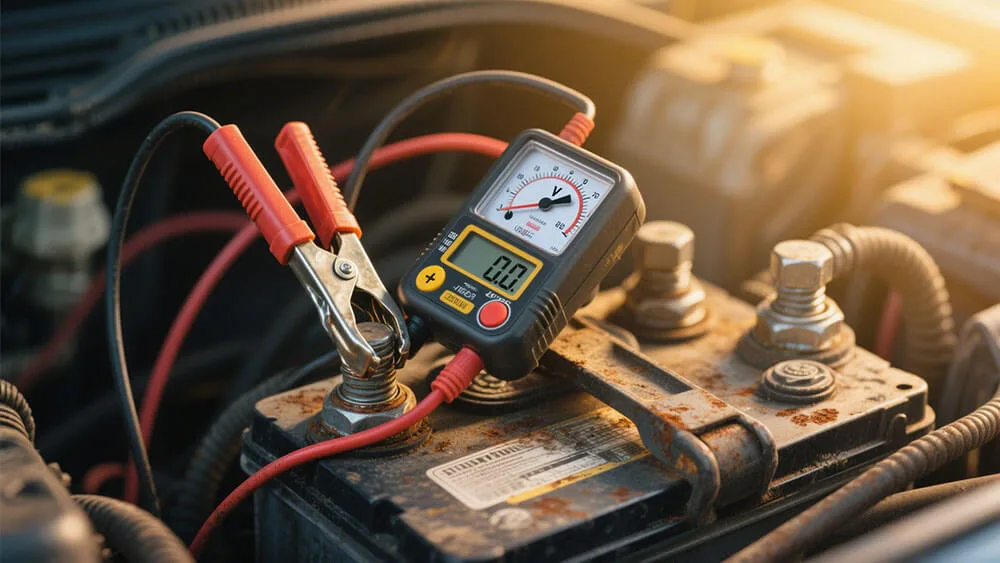
Method 3: Use a Multimeter
- A multimeter measures volts, amps, and ohms
- Set the multimeter to amps mode
- Connect it in series with the circuit
- Turn on battery power
- Read the amp value on the screen
Factors That Affect Car Battery Amperage
The amount of amps a car battery can produce depends on several important factors:
1. Vehicle Size and Engine Type
Small sedans with four-cylinder engines need less starting power than V8 trucks or diesel engines. Larger engines have higher compression and require more current to start, which is why heavy-duty vehicles often use batteries with higher CCA ratings or even dual battery setups.
2. Weather and Climate Conditions

Cold temperatures reduce battery power significantly. At freezing, a battery can lose up to 35% of its output, and at -22°F (-30°C), it can drop as much as 60%. High CCA ratings are crucial in cold climates. Extreme heat also affects battery life by accelerating fluid evaporation and corrosion, reducing overall capacity.
Why Does Amperage Matter for Your Car?
Amperage helps start your car and keeps electrical systems working. Low amps cause slow starts, while high-demand accessories can wear the battery. Choosing the right amps ensures reliable starting and longer battery life.
Car Battery Amps By Vehicle Type
Small Cars and Sedans
- Typical amps: 400–550 CCA
- Lower engine compression means less power needed to start
SUVs and Trucks
- Typical amps: 600–850 CCA
- Bigger engines = bigger power hunger
Diesel Vehicles
- Typical amps: 800–1000+ CCA
- Diesel engines require serious muscle to crank
Hybrid and Electric Vehicle Batteries

Hybrids still use a 12V battery for accessories, usually 300–500 amps, while EV traction batteries operate at entirely different amp levels (thousands of amps internally).
How Many Amps Does a Car Battery Use to Start a Car?
Starting Amps vs. Running Amps
Starting a car typically draws:
- 150–300 amps for gasoline engines
- 400–600 amps for diesel engines
Once the engine is running, amp demand drops dramatically.
Why Does Starting Need a Power Surge?
Starting is like pushing a stalled car uphill; once it’s rolling, it takes far less effort to keep it moving.
How Many Amps Does a Car Battery Produce While Driving?
Role of the Alternator
When the engine runs, the alternator takes over. It supplies:
- 30–100 amps, depending on electrical load
Battery Load During Normal Driving
The battery mostly rests while driving, acting as a buffer rather than the main power source.
Reserve Capacity (RC) vs Amp Hours (Ah)
| Reserve Capacity (RC) | Amp Hours (Ah) |
| Measured in minutes | Measured in hours |
| Delivers 25 amps continuously | Delivers a set number of amps over time |
| Drops to 10.5 volts | Usually measured over 20 hours |
| Important if the alternator fails | Common in deep-cycle batteries |
| Used in car batteries | Used in marine/solar batteries |
Testing and Maintaining Your Car Battery’s Amps
A car battery can show 12 volts but still be weak. Test it with a load tester or multimeter. Keep terminals clean and batteries tight, and test before winter for reliable starts and longer battery life.
How much electricity do car batteries produce?
A standard car battery produces about 12 volts of electricity. When you start the engine, it can deliver a strong burst of power, usually between 400 and 1000 amps, depending on the vehicle and battery size. Once the engine is running, the alternator takes over, and the battery mainly supports the car’s electrical systems and stores energy for the next start.
What Is Amperage, and How Is It Related to Amperes?
Amperage shows how much electricity flows in a circuit. It is measured in amperes (amps). An amp-hour (Ah) tells how long a battery can supply current. For example, a 50 Ah battery can deliver 1 amp for 50 hours or 10 amps for 5 hours, depending on usage.
Normal Current Output of a Car Battery
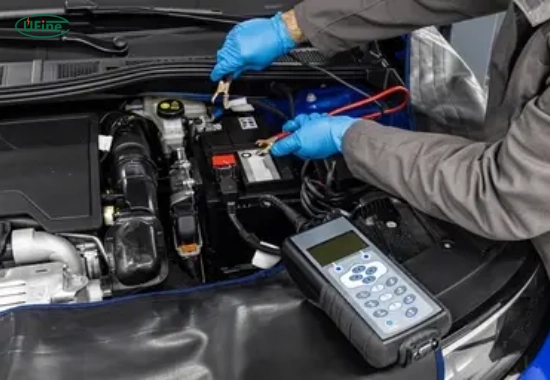
A typical car battery has a capacity of about 48 amp-hours (Ah), which is enough to power car electronics and start the engine. During engine startup, the battery provides a short burst of 400 to 1,000 amps, depending on vehicle size. Larger vehicles need more power.
What Is the Current Rating of a Car Battery?
Car battery current strength is often measured using Cold Cranking Amps (CCA). This rating shows how well the battery performs in cold temperatures (0°F or -18°C). Most car batteries range between 400 and 800 CCA, while heavy-duty batteries can exceed 1,000 CCA.
How Many Amps Are Needed to Charge a Car Battery?
A 12-volt car battery is usually charged at 2 to 10 amps.
- 2 amps: Slow and safe, up to 24 hours
- 6 amps: Medium speed, 6–12 hours
- 10+ amps: Fast charging, but needs supervision
Using the correct charging speed helps protect battery life.
How to Measure Car Battery Amps Using a Multimeter?
You can check battery condition by measuring voltage with a digital multimeter and comparing it to this chart:
| Voltage Reading | Battery Charge Level |
| 12.6V | 100% Charged |
| 12.4V | 75% Charged |
| 12.2V | 50% Charged |
| 12.0V | 25% Charged |
| 11.9V or below | Battery Dead |
Regular testing helps avoid sudden battery failure.
What power does a 12-volt car battery provide?
A 12-volt car battery usually provides about 48 amp-hours and up to 1,000 cold cranking amps. This power is enough to start the engine and run basic electrical systems when the car is not running.
How Long Can a 12V Battery Power a 100-Watt Device?
A 12-volt battery with 48 Ah capacity can power a 100-watt device for about 4 to 5 hours. Actual time may be shorter due to energy loss and battery efficiency.
How Do You Calculate Car Battery Wattage?
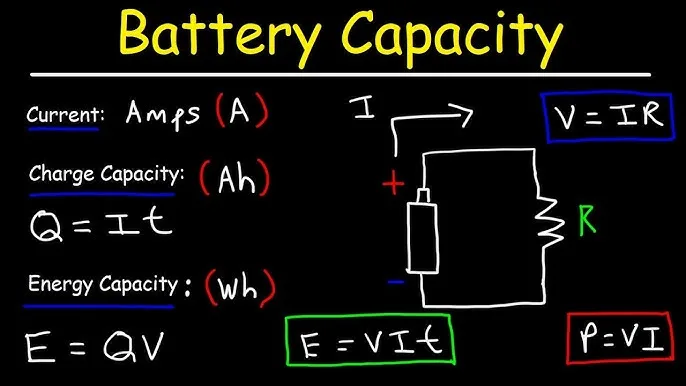
To find battery wattage, multiply voltage by amp-hours. For example, a 12-volt battery with 50Ah capacity produces about 600 watt-hours. This helps estimate how long the battery can run devices.
How Many Amps Does a Car Battery Output While Charging?
A car battery can be charged at 2 amps for slow charging or 10 amps for faster charging. Using the correct charger helps protect battery health and prevents overheating or damage.
How Many Amps Does A Single AA Battery Produce?
A regular AA battery usually produces about 1.5 volts and around 2 to 2.4 amps. It is suitable for small devices like remote controls, clocks, and toys, not high-power equipment.
FAQs
1. How Many Volts Is a Car Battery?
A standard car battery is 12 volts. When fully charged, it usually shows 12.6 to 12.8 volts. While the engine is running, voltage increases to about 13.7–14.4 volts because the alternator is charging the battery.
2. How Many Amps Is a 12-Volt Car Battery?
A 12-volt car battery does not supply one fixed amp value. It can deliver 400 to 1,000 amps for a short time when starting the engine, depending on the battery size and vehicle type.
3. Is 3000 Amps Enough To Start A Car?
Yes, 3,000 amps is more than enough to start a car. Most vehicles only need 400–1,000 amps. Jump starters rated at 3,000 amps easily start cars, SUVs, and even some diesel engines.
4. How Many DCDC Amps Should A Car Battery Have?
A car battery should supply DC power and usually provides 400–800 cold cranking amps (CCA) for normal cars. Larger vehicles and diesel engines may require 900–1,000+ DC amps.
5. Is a car battery 6 Amp Or 12 Amp?
A car battery is 12 volts, not 6 amps or 12 amps. Amps vary depending on demand. The battery can deliver hundreds of amps when starting the engine but much less during normal operation.
6. How Many Amps To Charge A Car Battery To?
A car battery is commonly charged at 2 to 10 amps.
- 2 amps is slow and safest.
- 6 amps is moderate
- 10 amps is fast but needs monitoring
7. How Many Amps Can a Car Battery Supply?
A healthy car battery can supply 400 to 1,000 amps for short periods during engine starting. For regular use, it provides much lower current to run lights, radio, and electronics.
8. How Many Amps Is A Standard 12-Volt Car Battery?
A standard 12-volt car battery typically has 400–600 CCA for small cars and 700–1,000 CCA for SUVs, trucks, and diesel vehicles. The exact value depends on engine size and climate.
9. What Is The Difference Between Amps And Volts In A Car Battery?
Volts measure the electrical pressure pushing current through the circuit, while amps measure how much current is flowing. Voltage is like water pressure, and amps are like the water flowing through a pipe.
10. How Many Amps Does It Take to Start a Car?
Starting a car usually requires 150–300 amps for gasoline engines and 400–600 amps for diesel engines. Larger vehicles may need even more during cold weather.
11. Can You Test Car Battery Amps At Home?
Yes, you can use a multimeter or a load tester to measure battery amps. Clamp meters are also useful for checking high cranking amps safely.
12. Does a Higher Amp Battery Last Longer?
Not necessarily. Higher amps provide more starting power, but battery life depends on maintenance, usage, and climate. Proper care keeps any battery lasting longer.
13. How Many Amps Should a Car Battery Have When Off?
When the car is off, a healthy battery draws very little current, usually less than 50 milliamps, to support small electronics like clocks or alarms.
14. How Many Amps Should a Car Battery Have When Charging?
A 12-volt car battery is normally charged at 2–10 amps. Slow charging is gentler, while higher amps charge faster but need supervision to avoid overheating.
15. How Many Amps Is The Car Battery Toyota?
Toyota car batteries vary by model. Most standard Toyota cars use 400–600 CCA, while larger SUVs and trucks may require 700–800 CCA for reliable starting.
16. How Many Amps Does a Car Battery Need to Start?
A typical gasoline car battery needs 400–600 amps for starting. Diesel engines and larger vehicles may require up to 1,000 amps due to higher compression.
17. How Many Amps Should a Fully Charged 12-Volt Battery Have?
A fully charged 12-volt battery can deliver hundreds of amps for short bursts when starting. For normal use, the current is much lower, usually a few amps for electronics.
Conclusion
So, how many amps is a car battery? The short answer: enough to kick your engine into life, usually between 400 and 1000 amps, depending on the vehicle. But the real story goes deeper; amps decide reliability, performance, and peace of mind. Choose wisely, maintain regularly, and your car will thank you every single morning.